


“Is physics universal or is it just something we’re making up in our minds?”
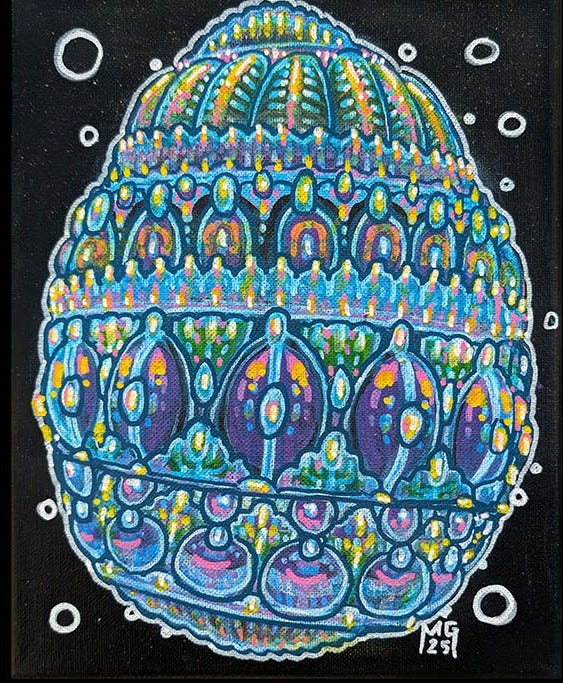
Artwork by Michael Garfield
“What is the universe made of ? What might this tell us about how it works what its fundamental it’s nature is. What is its most basic element that always had to exist and defines what the universe is? This is the question that motivates my science and I have devoted my life to ” I trust Daniel so much to ask and try and answer this question. It could be that he has an incredibly comforting voice with a tone, timbre and cadence that oozes reliability but I think (and hope) its also because he has a depth of understanding of the physical constraints of the universe that comes from years of study and research but still manages to confidently hold mystery and derive absolute joy in stretching himself. The mystery is the motivator for him. ‘Science is not a list of facts its a process and the first step in that process is to embrace what we don’t know, to explore the things we are ignorant about’ or culturally biased to, including as a species. In his latest book “Do Aliens Speak Physics” Daniel describes it as an exercise in checking his biases by exploring what it might be like to try to talk to advanced aliens about physics. Asking whether they will do physics the way we do, or is our most basic science more human than Universal?
He brings a playfulness, creativity and rigour to his understanding of how the world works that I aim for… Oh it has just dawned on me that the reason I’m so drawn to these characteristics in him is that this actually resonates pretty heavily with the goal that of our Foodweb Education program has where “Our students develop an intimate understanding of beauty, the capacity and limits of our planet and acquire the confidence and skills to be creative with that knowledge ” It is this aim to be as creative as possible within the constraints of what is possible that I believe is so critical for humanity. I think its Daniel’s relentless efforts to discern which are the boundaries that are human induced that I appreciate so much …. as well as his reassuring voice.
In this particular recording he makes reference to the unifying aspect of particles and this is a key habit of mind we aim for in our garden based program. The calcium strengthening your teeth could come from the parsley we are harvesting and eating in our tabouli today. Parsley which got their calcium via the soil in which it grows which may have come from ancient oceans filled with microscopic sea creatures which may have got it from the water in the ocean which may have come from space where calcium was created through stellar nucelosynthesis during the fusion of lighter elements in massive stars billions of years ago.
I also greatly appreciate that Daniel credits his son for inspiring the angle of his book ‘Do Aliens Speak Phsyics?’ as he shares in a converstaion with Sean Carroll
I have to give credit to that for my 14-year-old son at the time, actually. I pitched him a book about - is physics universal or is it just something we're making up in our minds? A sort of fundamental philosophical question that I really wanted to write about. And he was like, nah, boring. And he was just reading a book about aliens, so I came back and was like, okay, what about, when aliens come can we talk to them about science? Just sort of make it concrete. And he was like, that sounds like a fun book.
Valuing the perspective of children and allowing it to alter and inspire your approach can be transformative. When my youngest was two and half years old he had interrupted my desperate attempts to ‘teach ecoliteracy’ through a barrage of observations and attempts to make ecological sense of the early springtime activities of finches as they darted in and out of a heavily flowering cherry blossom with an earnest and emphatic demand that I ‘stop talking mum’. It was at that moment that not only did I instantly close my mouth and just let the phenomenon capture my own imagination alongside his but I also committed to trusting and really listening to my children and the insights their enquiring and creative minds brought. I flipped the script and stopped trying to prop up my sense of self worth by teaching them to becoming ecoliterate with and through them. Admittedly, I am exhausted from the unabated ‘lessons’ that come with parenting in a neurodiverse family but I am committed to the perspective shifting, empathy and growth that comes from inverting our position. It is interesting that this came difficult to my parenting when my approach to teaching has required and embraced flexibility and I’ve relied very heavily on the input and inspiration my students offer. In fact one of our longstanding pedagogical principles is
Inquiry, listening, flexibility, adjustment Are you modelling inquisitive behaviour and using students’ responses to adjust content/approach?
I would say this willingness is an actual necessity and that listening to my students is what has kept teaching so fresh for me for over 20 years… and hopefully meaningful and empowering for them. Their perspective and creativity provide the richest pathways to engagement and connection and this connection and trust can not be underestimated. Students who have positive connections with their teachers are more likely to have positive attitudes towards school, perceive themselves as part of their school community, attain higher academic results and place a high value on regular attendance (Commissioner for Children and Young People [CCYP], 2018). And reality is if it’s their idea they are invested and interested and so am I and things are going to work and be enjoyable. A recent example was when I tried to re-use what had been a very successful approach to the seasonal observation and exploration of the roles, uses and history of dandelions. It had been an incredible beautiful, poetic and profound conversation but the following day in a different school the physical exploration and play with dandelions brought much more meaning and engagement. The beauty of the flexibility of a teaching and pedagogical framework held by Here We Are is that you are able to open up to and follow children anywhere and still make it meaningful and consistent.
By placing ourselves into the shoes and senses of others, whether our children or aliens we are able to think more broadly, set aside our biases and interrograte our assumptions. Daniel walks so easily into the not yet known and I find this expansiveness very refreshing revealing the inspiring levels and types of rigourous play that can be enabled through science whilst also reminding us that it is the invitation and necessity of science to check biases, be creative and curious.
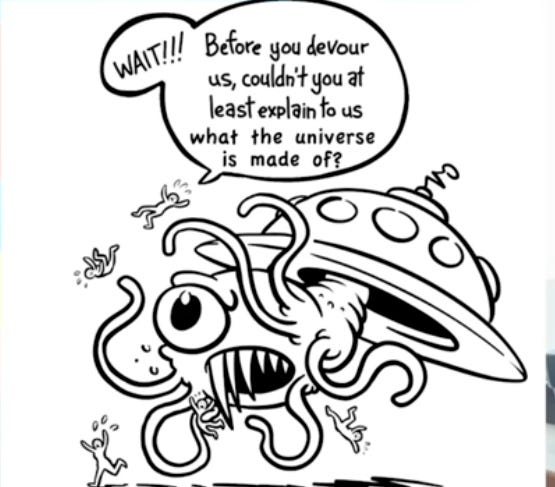
Thank you Daniel Whiteson for your relentless yet humble curiousity and perspective pushing and willingness to play with me on my project.
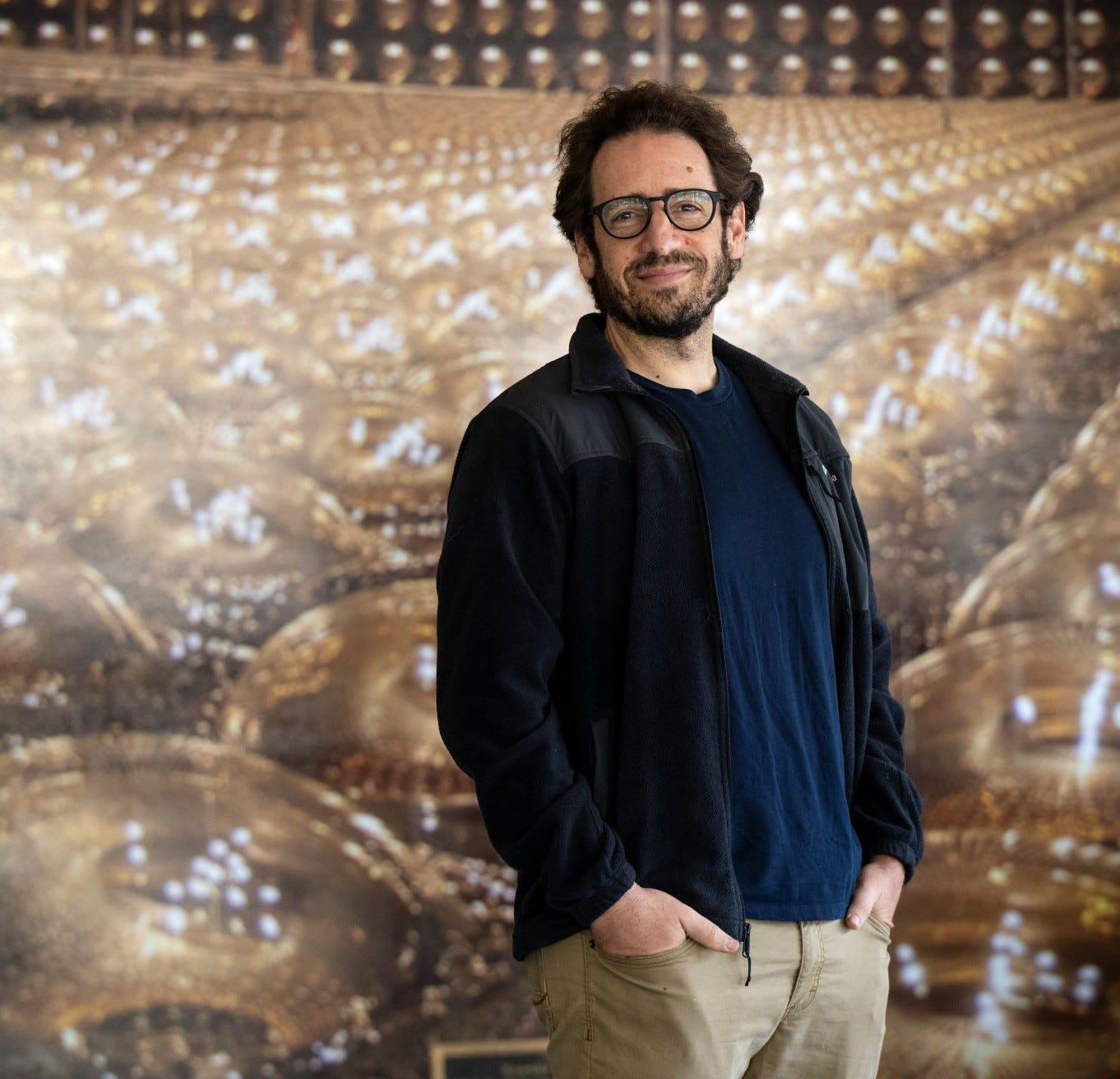
Photo credit: Steve Zylius/UC Irvine
Daniel Whiteson is a particle physicist and a professor of physics at UC Irvine.
He uses machine learning and statistical tools to analyze high-energy particle collisions in an effort to unravel the nature of matter and energy.
Check out his latest book: “Do Aliens Speak Physics” explores what it might be like to try to talk to advanced aliens about physics. Will they do physics the way we do, or is our most basic science more human than Universal?
He also co-hosts a podcast about the Universe, co-wrote three popular science books, and co-created an educational preschool television series on PBS.
Mindscape interview with Daniel Whiteson
Endless thanks to the audio, visual and editing legends of Here We Are:
Matt Woodham Treat Lightly
Music by Michael Garfield ‘Listening to plants’


