


I am located therefore I am
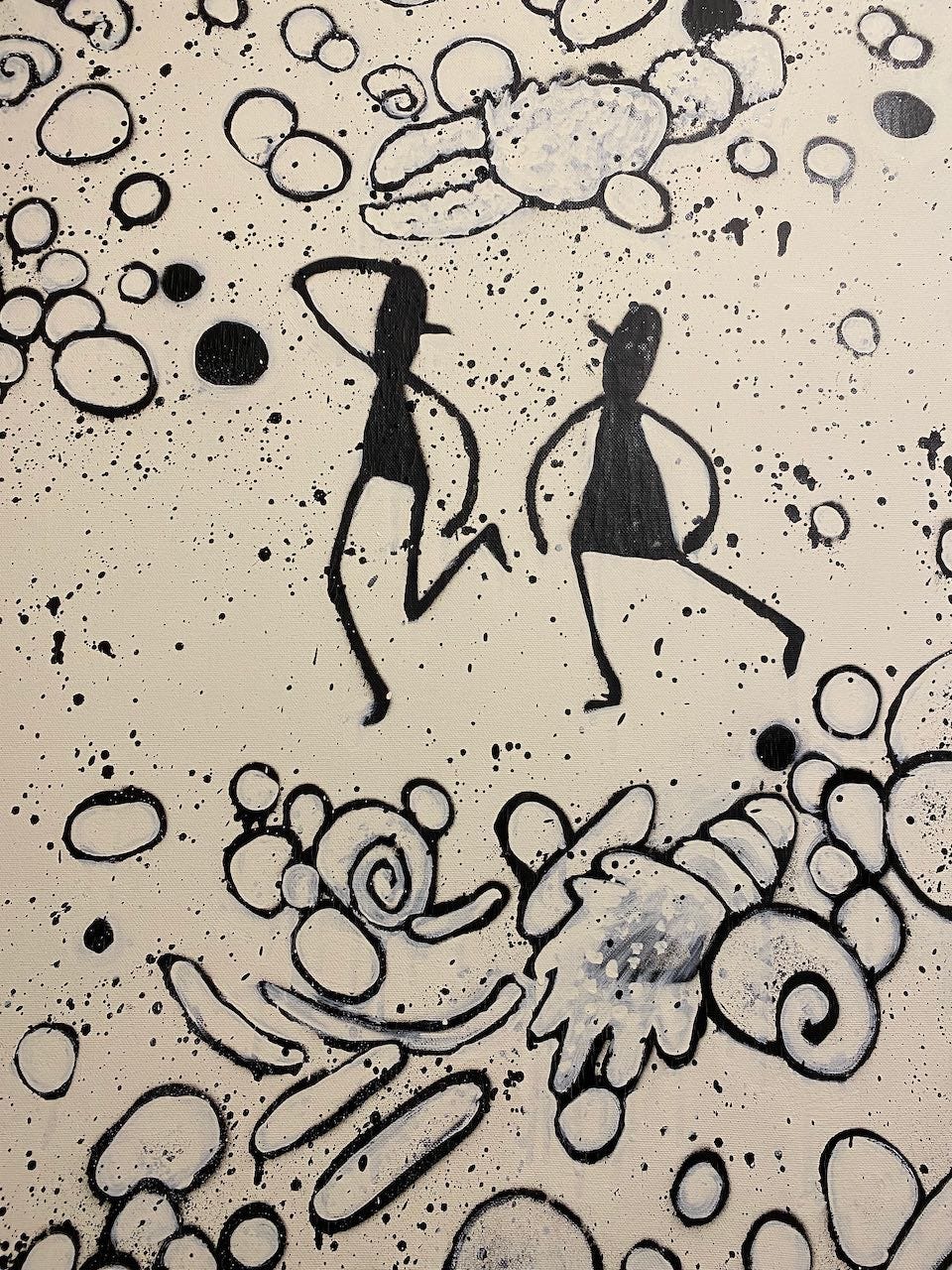
Sea Shell Walk by Tom Civil
Welcome - Here We Are, in this place.
What does it mean and feel like to be located? - our identity, character and culture coming from the land? Why do we need to belong to our bioregions and how we do that? and how do we do that within and through our gardens? How to get to know and start rebuilding our relationships with landscapes? Where does one begin to develop an embodied relationship with the place, people, beings, and land where you live? How do we begin to resprout meaningful existences and activate the reemergence of communities and cultures that are connected to and responsive to their biophysical conditions?
These are living questions for me and are constantly sprouting from the phrase Here We Are forming many of the explorative root hairs of the Foodweb Education program. Like root hairs these questions dramatically increase the surface area of my learning and teaching, expanding the capacity for absorbtion and exchange, stabilility, security and healthy communities. I don’t know where they’ll take me necessarily but it feels fertile and nourishing. Actually, now that I think of it, on the flip side the impact on root hairs that are trying to grow through the toxic, depauperate soils resulting from modern industrial agricultural practices provides a potentially useful metaphor for exploring the impact of disconnect from place as well. Digging into why, when and how this has happened is also interesting and important. Tyson Yankaporta offers this insight:
The problem is people have been displaced from their lands. And the land gives you everything. Ideally, you’re in relationship with the land that you know intimately. You [as a human[ are a system that’s been created for relational embodied cognition and so you’re supposed to be out connecting with people, humans, non humans, and places in the world. That’s where your cognition is, that’s where your knowledge is, that’s where your personal development is. It’s out there.
The ‘Thousand Year Clean-Up’ Rosie Spinks with Tyson Yunkaporta
So, how do we become intimate with the land we live with not just on? It feels like such a mammoth yet crucial task. I know I have found it overwhelming trying to form a meaningful relationship and understanding of the region I relocated to. I have struggled to grow roots, get to know the history and more than human inhabitants I share my life with now as well as understand the flows of the landscape processes. One of the reasons it feels constantly out of reach has been the result of my nervous system existing in survival mode. My safety has been hijacked and attention seized by the pressures and challenges of family life in this contemporary, disconnected world. Here We Are reminds me to essentially F*%K that, pause and pay attention to this place and its living communities. Thats all well and good but what are some practical tools and skills for doing this? and where do I find the time for it? I need some hacks for growing a deep awareness and connection to this place.
This is where we begin this next chapter Here We Are in this place with David George Haskell who will be our initial and a most trustworthy guide for beginning this journey. We start by ‘paying attention - which is being present to the place you are and leads to curiosity and connection’… The connection, the relational aspect is key but requires our attention’.
David George Haskell is a biologist who spent an entire year ‘showing up again and again to one particular place and opening my senses’ observing and documenting almost daily 1 square metre of old growth forest resulting in the book The Forest Unseen. He then went on to write more books including titles like Thirteen Ways to Smell a Tree and The Songs of Trees. I admit I am envious…. no, no - deeply inspired by David’s skills for belonging and his eloquence when sharing his strategies and experiences. He has mastered some of the objectives of the Foodweb Education program like harnessing science to re-enchant, re-animate and re-connect humans to the living world (including the mundane and ‘unnatural’); attuning and attending to the more than human world as well as bringing an open, heartfelt yet perspicacious awareness of complex issues and our ethical responsibilities. He brings an acumen, rigour , creativity and a swathe of substantiated practical strategies for beginning the process of re-rooting ourselves in earth in order to ensure our ethical decisions are grounded in our human relationship to earth and place.
In this recording I appreciate his step by step guide to tuning into our senses and naming and describing things but then highlighting the limits of this. Over the years I have had moments of being hyper-fixated and sometimes successful at identifying and memorising plants, microbes other ‘objects’ and their categories. However, I have perpetually been challenged by processes and relationships and dreamt of having mindmaps of biocultural indicators to inform my existance.
For me it has been useful to bring in ecological patterns as a framework for exploring relationships. Energy flows, matter cycles and systems dynamics have provided potential whys as well as the tools for seeing that the living world is relational and processual and locating myself as a participant. The sensory invitation from David seems like the most simple and plausible (and fun) entry point for further interesting and potentially meaningful understanding and connection. Along with the divine Robin Wall Kimmerer, David has helped me to really value the role of our bodies for gathering data right through to challenging paradigms. As David says When your senses are engaged you start asking questions, and going beyond naming into describing things and then into thinking about what relationships are most important and I think this is when you really get down to the change in the way of thinking that is necessary I think from the old sort of western scientific of thinking about the world as separate objects each of which has a name” (David George Haskell)
I have heard David George Haskell describe that being present, paying attention is a form of prayer, a form of love and that the curiousity it invites in then sharpens our attention opening us to stories and questions and those that have been excluded revealing both beauty as well as the injustices contained within these stories like the ethico-onto-epistemological shifts of Karen Barad’s agential realism. Paying attention brings immense responsiblity as well as opportunity.
“Abstract ideas and political dialogue and so forth are all really important. But I think so often they’ve become so disconnected from actual experience of the living Earth and of the creatures and other people whose lives are being affected by the decisions we make. Like a plant that gets unrooted, they get withered and distorted.
And so what would it be if the people who are making decisions, say about town planning or about big global things like climate change and forests or very local things like how are we going to manage vegetation or what’s most important in the curriculum for our students? If the people making those decisions had years of lived experience with their senses fully turned on within the communities that they’re discussing”
The sensory portal of the garden is an immense opening and offers students and and teachers the opportunity to become enlivened. I remember the uninhibited joy my son experienced when we set up camp one summer on the Meander River. Feet dangling in the water hugged by the forest he scrambled through his emotions to describe this experience of existance that he had obviously been yearning for as he stuttered ‘i feel like….i feel like… i feel like…a real person here’.
It breaks my heart that he doesn’t feel that in daily life and/or that we continue to move further away from it as he ages but this also offers a challenge to try and create opportunities for it. Gardens at school potentially offer children these spaces and encounters and opportunities to feel like a ‘real person’ as well as learn about reality from reality.
‘Gardening is where we learn how the world works’
This is a direct quote from a 10 year old student that elegrantly summed up the underlying purpose of the Foodweb Education program - that through observing, intra-acting, enquiring and exploring our garden we learn the fundamentals of the processes that make and sustain life and we are invited into earth sciences as a participant.
With ‘the garden as our teacher’ and through tracing ecological processes and patterns through the garden iteratively the aim is that these become intuitive and embedded in our thinking and decision making processes. We hope our students develop an intimate understanding of beauty, the capacity and limits of our planet and acquire the confidence and skills to be creative with that knowledge. Gardens, even an indoor plant offer so many lifelines, binding us through relationship to reality, providing root hairs that keep us grounded and able to access the truths of life that are seeming further and further away. As David said ‘there’s a simple joy of knowing and remembering that this food (from the garden) came from a generous living earth’ and as Tyson Yankaporta said in reference to gardening, especially in community “You’re forming relationships and communities that make the blueprint of a life that’s embedded back in place and with people.” Here We Are in this place growing, eating, listening to, smelling and paying attention to trees Thank you David.
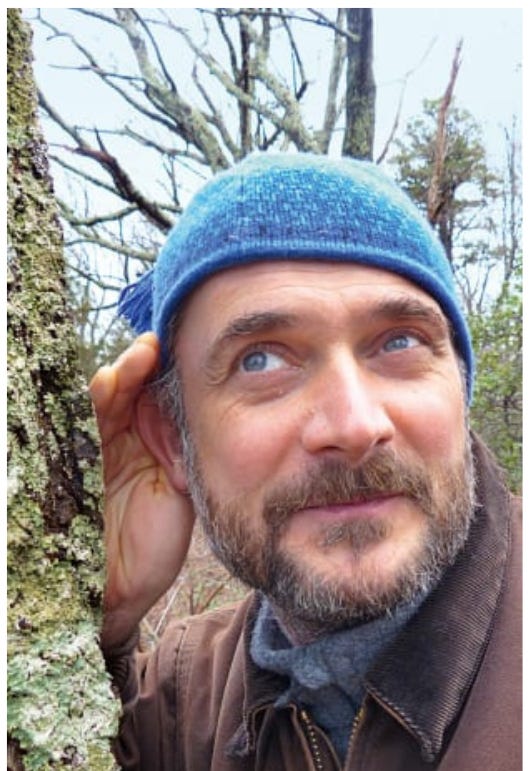
David George Haskell is a writer and biologist holding degrees from the University of Oxford (BA) and from Cornell University (PhD). He is Adjunct Professor in the Department of Environmental Sciences at Emory University in Atlanta. He previously was William R. Kenan Jr. Professor of Biology and Environmental Studies at the University of the South, where he served as Chair of Biology and Director of the Environmental Arts and Humanities major.
His books:
How Flowers Made our World: The Story of Nature’s Revolutionaries will be published in March 2026 (US, UK).
Sounds Wild and Broken, was finalist for the Pulitzer Prize in General Nonfiction
The Forest Unseen: A Year’s Watch in Nature (Viking, 2012), was winner of the National Academies’ Best Book Award for 2013
The Songs of Trees: Stories from Nature’s Great Connectors (Viking, 2017)
Thirteen Ways to Smell a Tree (Octopus Press, 2021)
I also recommend listening to anything you can find that David has recorded including - these interviews and other Listening:
Attention, curiosity, and sensory awareness in nature David George Haskell Journalling with Nature podcast
Triple R Radio On The Beauty Of Listening In Nature And The Crisis Of Sensory Extinction
“When the Earth Started to Sing“, 2022. Written and narrated by David George Haskell, sound design and mixing by Matthew Mikkelsen, produced by Emmanuel Vaughan-Lee. Winner (Gold and Listener’s Choice), Signal Awards for “Most Innovative Audio Experience,” “Best Editing,” and “Best Sound Design”
Endless thanks to the audio, visual and editing legends of Here We Are:
Matt Woodham Treat Lightly
Music by Michael Garfield ‘Listening to plants’


